
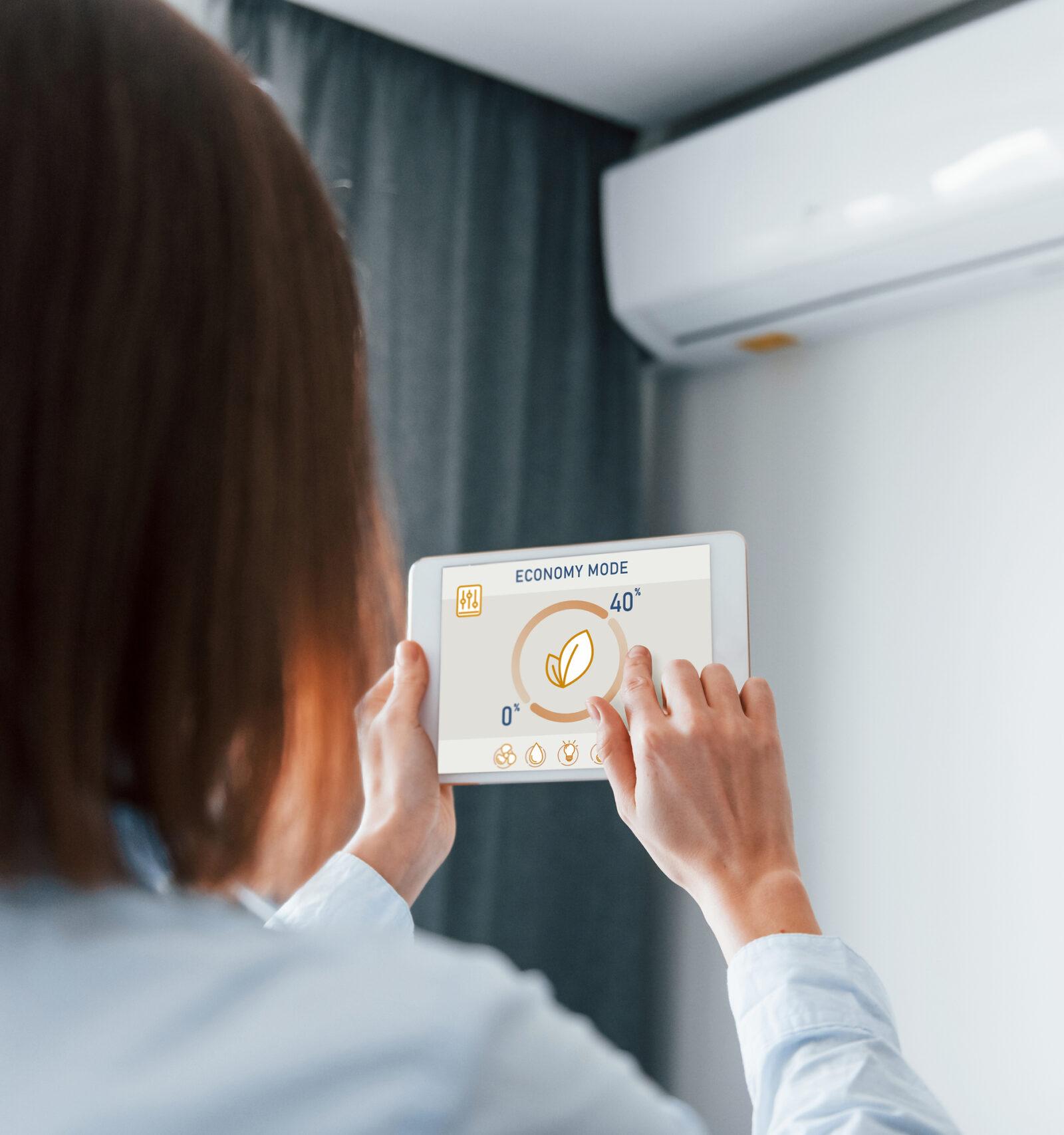
A smart thermostat is the single cheapest upgrade that meaningfully lowers an HVAC bill in a Brentwood or Franklin home. Done right, it pays for itself inside the first cooling season. Done wrong, it fights your system and shortens compressor life. Here is the honest playbook our techs use when a homeowner asks which one to buy.
Why "smart" matters in a Williamson County home
Most local homes have two real comfort problems: long unoccupied stretches during the workday, and big swings between bedrooms upstairs and living spaces downstairs. A good smart thermostat solves the first directly (geofencing, scheduling, learning) and the second indirectly (remote sensors that average temperature across rooms instead of guessing from a hallway).
The three thermostats worth installing in 2026
1. ecobee Smart Thermostat Premium
Our default recommendation for most Brentwood and Franklin homes. Comes with one remote room sensor in the box, supports up to 32. Built-in air quality monitor, occupancy detection, and a SmartSensor that lets you average the master bedroom into the cooling setpoint at night. Pairs with Apple Home, Google Home, Alexa, and SmartThings. Around $250.
2. Google Nest Learning Thermostat (4th gen)
Best if you already live in the Google ecosystem. The learning algorithm is genuinely good at figuring out your weekday vs weekend schedule within 2 weeks. Cleanest hardware on the market. No included room sensor in the box (add-on at $40 each, supports up to 6). Around $280.
3. Honeywell Home T10 Pro
The pick when wiring is messy or when the home runs zoned dampers. T10 handles complicated systems (dual fuel, zone control, humidification) that often confuse Nest and ecobee. Less polished app, but rock solid. Around $230 with one room sensor included.
What to avoid
- Sub-$100 generic Wi-Fi thermostats. Most don't actually support 2-stage or variable-speed equipment correctly. They'll run a 2-stage system in low stage permanently and you'll bake on a 95 degree day.
- Battery-only models in homes without a C-wire. They steal power from the heat call wire and cause short-cycling. If you don't have a C-wire, run one (or have us run one) before installing.
- "Smart" thermostats that came free from your power company. They usually hand control of your setpoint to the utility during demand events. Read the fine print.
Compatibility: the part most homeowners get wrong
Before you buy, pull the existing thermostat off the wall and photograph the wiring. You're looking for these terminals:
- C wire (Common): Required for almost every modern smart thermostat. Powers the unit continuously instead of stealing from the heat call.
- Y1 / Y2: 2-stage cooling. A real 2-stage AC needs both connected.
- W1 / W2: 2-stage heating, same idea.
- O / B: Heat pump reversing valve. Only on heat pump systems.
- G: Fan.
If your current thermostat has only R, W, Y, and G (no C), you need a C-wire pulled before installing any of the thermostats above. A tech can run one in 30-60 minutes in most homes. Don't trust "C-wire adapters" sold online; they cause flicker problems on variable-speed equipment.
The setpoint strategy that actually saves money
Forget the old "set it back 10 degrees while you're at work" advice. On modern high-efficiency equipment in Tennessee humidity, that strategy increases runtime when you get home and undercuts savings. The numbers that actually work:
- Cooling: 76 when home, 79 when away, 74 at night. Don't let it climb past 80 indoors or your AC has to pull out a lot of latent humidity on recovery.
- Heating: 68 when home, 62 when away, 66 at night.
- Fan: Set to "circulate" for 20 minutes per hour, not "on" continuously. You get the air mixing without the duct losses.
What the install actually involves
A clean smart thermostat install in a Brentwood home runs 45-90 minutes:
- Power off at the breaker (yes, even for 24V thermostats).
- Photograph existing wiring, label every wire.
- Pull new C-wire if needed.
- Mount and level the new thermostat base.
- Configure for your specific equipment type (this is where DIYers usually go wrong).
- Test cooling, heating, and emergency heat (if applicable) before leaving.
- Walk you through the app and link it to your phone.
We install smart thermostats as a flat-rate service for $189, parts not included, or roll it into any maintenance visit at a discount. Want to talk through which thermostat fits your system? Call (615) 254-6283 and we'll diagnose the wiring before you buy anything.